
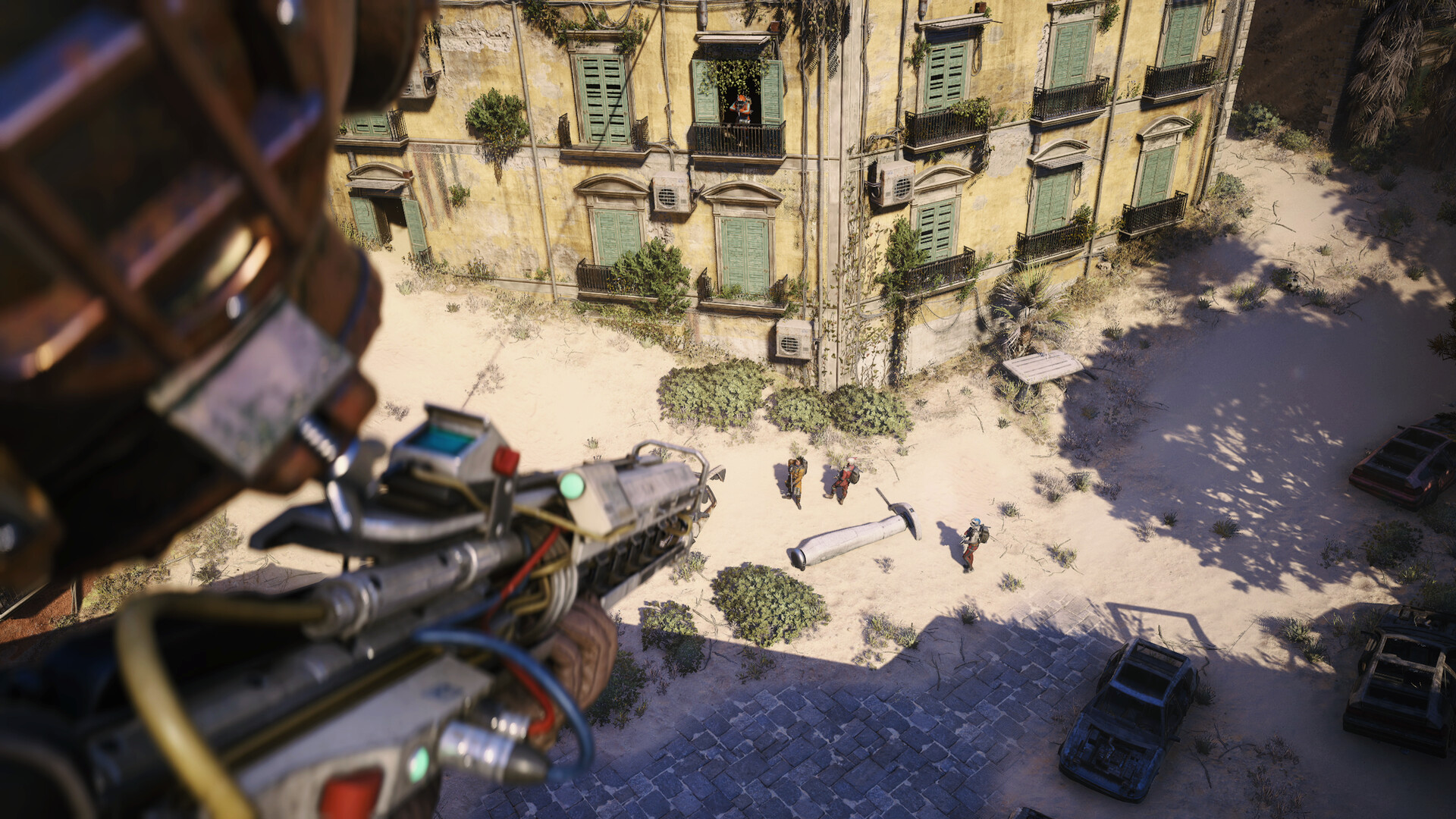
Playing solo in a game built around contested raids is not a handicap to be overcome. It is a different game with different win conditions. A squad can absorb a mistake because there are three other people to cover it. A solo raider cannot, so the entire discipline is about not making the mistake in the first place.
The first rule: never be the loudest thing
A squad fighting an ARC unit makes noise, and that noise is a beacon. A solo raider who hears a fight knows exactly where a group is, roughly how many, and roughly what they are doing. This advantage is symmetric, which means the primary solo discipline is to never produce the beacon. Every fight you take is an advertisement.
The practical form is to let machines and groups find each other. A solo route should be planned to pass near — but not through — the places where other players will be, so that their fights happen at a distance from you and provide information rather than risk.
Sound is the map behind the map
Footsteps are the most reliable information in the game and the most reliable way to give yourself away. Walking instead of sprinting is slower and safer, and the trade is not close: a sprint across an open space tells every player within earshot not just where you are but where you are going.
The counterpart is that a sound you hear is also a sound someone else can hear, so a fight two hundred metres away tells you where two parties are and tells them nothing about you. A solo raider should be a listener first and a mover second.
Fights a solo should never take
There is a category of engagement that a solo raider loses regardless of skill, and it is worth naming explicitly so that it can be declined without hesitation.
- Any fight in an open space. There is no cover, no exit, and no way to break line of sight. Even a won fight leaves you exposed and loud.
- Any fight against a group that has already seen you. They have numbers, they have comms, and you have a pack you would like to keep. Break contact instead.
- Any fight that starts because you were surprised. If you did not choose the engagement, you have already lost the information war. Disengage, reposition, and only re-engage if the situation has genuinely changed.
- Any fight to defend loot you can replace. A cheap kit is worth less than the risk of a contested extraction. There is nothing in a raid worth dying for except a quest item you cannot get otherwise.
The route is the strategy
A squad can adapt a route mid-raid because it has four sets of eyes. A solo raider is adapting blind, so the route has to be decided before the launch and followed unless something physical blocks it. The best solo routes are not the shortest — they are the ones with the most decision points, so that a problem in one segment can be solved by taking a different exit from it rather than by backtracking.
This is also why learning one map thoroughly beats learning several maps shallowly. A solo raider who knows three exits from a room has options; a solo raider who knows the map generally has a plan that only works if nothing goes wrong.
The Frigate and other high-value, high-traffic places
Named landmarks with dense loot attract players, which means the same place that is worth the most is the place where the most people are competing for it. The official notes reference the Frigate often — it is one of the most-mentioned locations in the tracked patch record — and that frequency is itself a signal: it is a place the developers had to keep adjusting because it is where the game happens.
For a solo raider, that means arriving either very early or very late, never in the middle. Early means before the first wave of players has spread out; late means after the ones who came for the same thing have either extracted or died. The middle of the window is where the crowd is.
What solo play is actually good at
It is worth being clear that solo is not a worse version of group play. It is faster between decisions, it has no coordination cost, and it can take routes a group cannot because a group cannot move quietly through a corridor. The win condition is different — extract consistently rather than win fights — and a raider who accepts that condition will lose fewer kits than one trying to play a group game alone.